No. Chocolate is toxic to dogs of every size, and darker chocolate is the most dangerous. How sick your dog gets depends on three things: the type of chocolate, your dog’s weight, and how much was eaten. Use the chart below to see exactly where your dog stands — then call your vet.
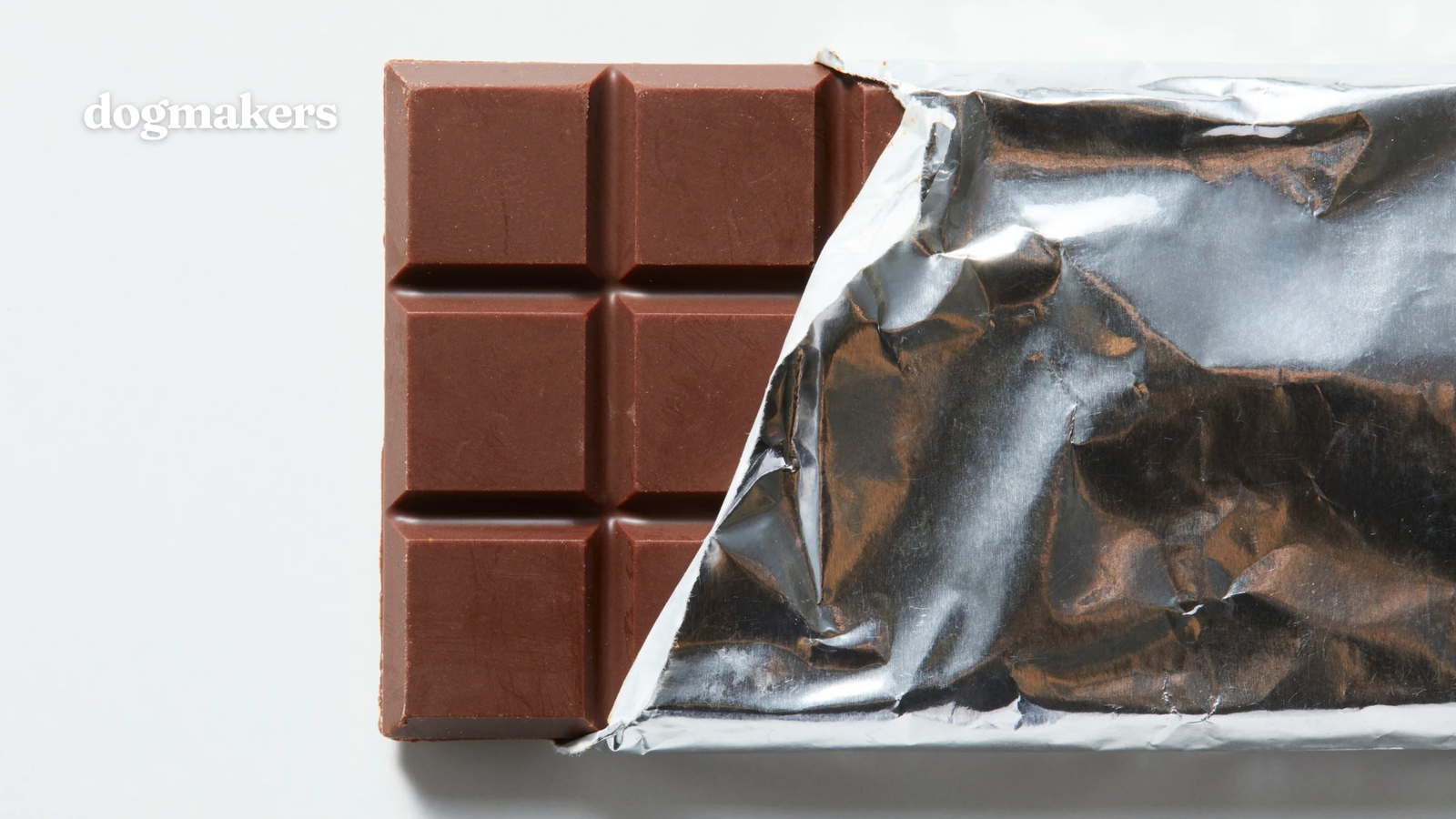
Theobromine in chocolate is poisonous to dogs. Mild signs start around 20 mg per kg of body weight, heart danger begins at 40–50 mg/kg, and seizures can start at 60 mg/kg or more (Merck Veterinary Manual). If your dog ate chocolate, don’t wait for symptoms — call your vet or a poison hotline now.
Key Takeaways
- The danger is theobromine — a stimulant dogs clear from their blood very slowly, so it builds up to toxic levels.
- Darker = deadlier. Baking chocolate (~364 mg/oz) packs roughly 6× the theobromine of milk chocolate (~57 mg/oz).
- One Hershey’s Kiss (~9 mg) is not an emergency for a 20 lb dog. One square of dark or baking chocolate can be.
- Signs usually start 6–12 hours after eating. By then, the best treatment window is closing — call first, don’t wait.
Hotline for Emergencies
ASPCA Animal Poison Control (888) 426-4435 or Pet Poison Helpline (855) 764-7661 (US, fee applies). In the UK: Animal PoisonLine 01202 509000.
The Chocolate Danger Chart (mg of Theobromine per Ounce)
| Chocolate type | Theobromine per oz | Danger for dogs |
|---|---|---|
| White chocolate | ~0.25 mg | Almost none — but still fat and sugar |
| Milk chocolate | 57 mg | Milder — amount and weight decide |
| Semisweet chips | 136 mg | High — small dogs at real risk |
| Dark chocolate 70–85% | 227 mg | Very high |
| Unsweetened baking chocolate | 364 mg | Most dangerous — tiny amounts are serious |
These numbers come from the FDA’s published theobromine table — the same reference vets use.
How Much Chocolate Is Too Much? (By Dog Weight)
This table shows how much milk chocolate it takes to reach the first (mild) danger zone — about 20 mg of theobromine per kg of body weight.
| Dog’s weight | Mild signs start at (milk chocolate) | Roughly equal to |
|---|---|---|
| 5 lb | ~0.8 oz | 5 Hershey’s Kisses |
| 10 lb | ~1.6 oz | 2 fun-size bars |
| 20 lb | ~3.2 oz | 1 standard bar |
| 40 lb | ~6.4 oz | 4 standard bars |
| 60 lb | ~9.6 oz | 6 standard bars |
| 80 lb | ~12.8 oz | 8 standard bars |
Critical: darker chocolate changes the math. Divide the amounts above by about 2.5 for semisweet chips, 4 for dark 70–85%, and 6 for baking chocolate. A 20 lb dog hits the mild-signs zone with under 1 oz of baking chocolate — one square.
The Three Danger Zones
Merck Veterinary Manual, the reference vets use, sets the zones by theobromine dose per kg of body weight:
- ~20 mg/kg — mild: vomiting, diarrhea, extreme thirst
- 40–50 mg/kg — cardiac: racing heart, restlessness, tremors
- 60+ mg/kg — seizures: life-threatening heart and neurological risk
For scale: Merck notes milk chocolate becomes potentially lethal around 1 oz per pound of body weight — a full bag of chocolate chips for a small dog.
Why Dogs Can’t Handle Chocolate As You Do
Dogs are not small humans here. They break down theobromine slowly, so it builds up in the bloodstream instead of clearing out. Merck notes theobromine’s effects run 3–10 times stronger than caffeine’s — and they last far longer. What’s a pleasant boost for you can be a cardiac and neurological emergency for your dog.
Real Scenarios: A Kiss, an M&M, a Brownie
| What your dog ate | Approx. theobromine | 5 lb dog | 20 lb dog |
|---|---|---|---|
| 1 Hershey’s Kiss | ~9 mg | Below danger zone | Below danger zone |
| 1 plain M&M | ~2 mg | Below danger zone | Below danger zone |
| 1 dark square (70–85%) | ~80 mg | Cardiac zone — emergency | Below zone — but 2–3 squares reach it |
| 1 brownie (2-inch) | ~100–200 mg | Cardiac zone — emergency | Mild zone — call your vet |
The pattern: small dogs plus dark chocolate is where emergencies happen. A big lab who steals a milk-chocolate Kiss is a watch-and-wait case. A chihuahua who eats a brownie is a call-right-now case. If your dog raided the baking shelf, two extra dangers ride along with chocolate — dough and fat. See Can Dogs Eat Bread? for that breakdown.
Timeline: When Signs Appear and How Long It Lasts
- 0–2 hours: the best window. Your vet can often induce vomiting safely and give activated charcoal.
- 6–12 hours: first signs usually show — vomiting, diarrhea, thirst, restlessness.
- 12–24 hours: higher doses progress to tremors and a racing heart.
- 24–72 hours: theobromine clears slowly, so severe cases peak here. Dogs can stay sick for days.
What to Do If Your Dog Ate Chocolate
Time needed: 15 minutes
A clear, step-by-step guide to the actions you need to take after confirming chocolate ingestion in dogs.
- Grab the facts.
Note the type of chocolate, the wrapper, and the time your dog ate it. Take a photo of the label.
- Call for help immediately.
Your vet first; otherwise, ASPCA Animal Poison Control (888) 426-4435 or Pet Poison Helpline (855) 764-7661 (US, consultation fee applies). In the UK: Animal PoisonLine 01202 509000.
- Don’t make your dog vomit unless a professional tells you to.
It only helps in the first hour or two and can harm without guidance.
- Expect treatment before symptoms.
Vets use activated charcoal, IV fluids, and heart monitoring early — Merck notes the outlook is good when treatment starts promptly.
- Follow through at home.
Keep your dog calm and hydrated and watch for 24 hours even if the first signs look mild.
How to Stop It Happening Again
- Store chocolate up high, in closed cupboards — counter surfing is the #1 route in.
- Use lidded trash cans; chocolate smells are magnets.
- Tell kids and guests not to share — one generous grandparent can cause an emergency.
- Watch holiday spikes: Halloween, Christmas, and Easter fill poison hotlines for exactly this reason (the FDA issued its warning for these celebrations).
- Swap safely: carob looks and tastes like chocolate and contains no theobromine.
Disclosure: As an Amazon Associate, Dogmakers earns from qualifying purchases — at no extra cost to you.
Pick up carob dog treats on Amazon as the safe chocolate-style swap, and keep a pet first-aid kit in the house before you ever need it.
FAQs
For most dogs, no. A Kiss has about 9 mg of theobromine; a 20 lb dog would need roughly 180 mg to reach the mild-signs zone. But a dark-chocolate Kiss is about 4× stronger, and toy-breed owners should still call their vet for advice.
No. A plain M&M carries about 2 mg of theobromine — nowhere near a toxic dose even for a 5 lb dog. The risk starts with dark chocolate, or when the whole bag goes down.
Call your vet anyway. Signs take 6–12 hours to appear, so “seems fine” proves nothing in the first hours. Give the type, amount, and time; the vet will tell you whether to watch at home or come in.
Mild signs start around 3.2 oz of milk chocolate, 1.3 oz of semisweet chips, 0.8 oz of dark 70–85%, or 0.5 oz of baking chocolate. The math: 20 lb ≈ 9.1 kg, × 20 mg/kg ≈ 182 mg of theobromine.
Vomiting and diarrhea usually come first, with extreme thirst, panting, and restlessness — typically 6–12 hours after eating. Tremors or a racing heart mean it has progressed; go in.
Up to 72 hours. Theobromine clears slowly in dogs, so severe cases can stay dangerous for days even with treatment.
Yes — most dogs survive when treatment starts early. Risk climbs with darker chocolate, smaller body weight, bigger doses, and delays. Heart rhythm problems and seizures are the emergencies vets fight first.
The biggest ones: grapes and raisins (no safe dose is known), xylitol sweetener, onions and garlic, alcohol, and macadamia nuts. Grapes are especially sneaky — see Can Dogs Eat Grapes? for why even one grape can be an emergency.
Sources
- Merck Veterinary Manual — Chocolate Toxicosis in Animals
- FDA — Leave Chocolate Out of Rover’s Celebrations
- VCA Animal Hospitals — Chocolate Poisoning in Dogs
- ASPCA — People Foods to Avoid Feeding Your Pets
- PetMD — Can Dogs Eat Chocolate?
- AKC — Can Dogs Eat Chocolate?
Dogmakers gives general information, not veterinary advice. Chocolate poisoning is a real emergency — when in doubt, call your vet or a poison hotline right away.

Leave a Reply