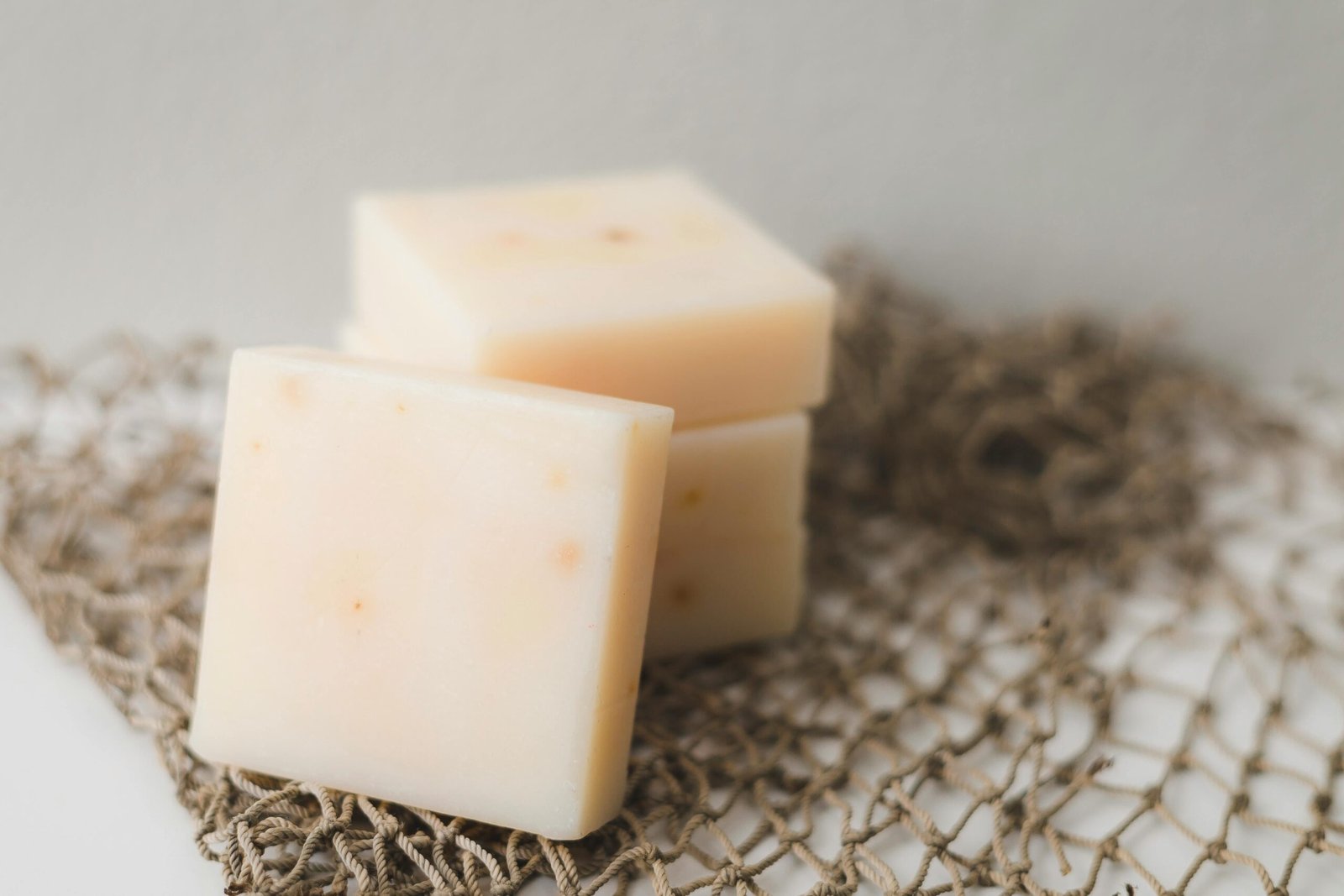
Yes, most dogs can eat small amounts of plain cheese like cheddar, mozzarella, or cottage cheese. Cheese is not toxic to dogs, but it is high in fat and lactose, so overfeeding causes stomach upset or pancreatitis. One type — blue cheese — can genuinely poison your dog and should never be shared.
Safe in small amounts — with one serious exception. Plain cheeses like cheddar, mozzarella, and cottage cheese are fine as an occasional treat for healthy dogs. Never feed blue cheese — it can carry roquefortine C, a mold toxin that causes tremors and seizures — and skip cheese completely if your dog has pancreatitis.
Key Takeaways
- Cheese is not toxic to dogs — except blue cheese (Roquefort, Stilton, Gorgonzola), which can contain roquefortine C, a mold toxin linked to tremors and seizures in dogs.
- Follow the 10% rule: all treats combined, including cheese, should stay under 10% of your dog’s daily calories.
- Safe portion: a few pea-sized pieces for small dogs, up to one ounce for large dogs.
- Fat is the biggest danger — a high-fat cheese binge can trigger pancreatitis, a painful and potentially life-threatening inflammation.
- Most adult dogs are at least mildly lactose intolerant, and tolerance falls as dogs age. Gas, bloating, or diarrhea means cheese is off the menu.
- Flavored cheeses (garlic, herb, pepper) and processed cheese spreads are never safe.
Which Cheeses Are Safe? (Full Chart)
| Cheese | Lactose | Fat / Salt | Verdict |
|---|---|---|---|
| Mozzarella/string cheese (part-skim) | Low | Moderate fat | ✅ Best everyday option |
| Cottage cheese (low-fat) | Low | Low fat | ✅ Gentlest on sensitive stomachs |
| Soft goat cheese | Lower than cow’s milk | Moderate fat | ✅ Good option — small amounts |
| Cheddar | Very low | High fat | ✅ Small cubes only |
| Swiss | Very low | High fat | ✅ Small cubes only |
| Parmesan | Very low | Very high salt | ⚠️ Tiny grating only |
| Cream cheese | Moderate | High fat | ⚠️ Thin smear only |
| Brie / Camembert | Higher | High fat, mold rind | ⚠️ Better to avoid |
| Feta | Low | Very salty | ❌ Skip — salt load |
| American (processed) | Moderate | High fat + salt | ❌ Skip |
| Blue (Roquefort, Stilton, Gorgonzola, Danish blue) | — | High fat | ❌ NEVER — roquefortine C risk |
| Garlic/herb/pepper jack/cheese spreads | — | Varies | ❌ NEVER — garlic & onion are toxic |
Aged hard cheeses have the least lactose, which is why cheddar and Swiss are tolerated better than soft, fresh cheeses. That doesn’t make them “healthy” — it just makes them less likely to cause an upset stomach. And before sharing any new food, cross-check it against a master list of human foods dogs can and can’t eat from the American Kennel Club (AKC) — the basics of safe sharing apply to cheese the same way they apply to everything else from your plate.
How Much Cheese Can a Dog Eat? (Portions by Weight)
Cheese is calorie-dense: one ounce of cheddar packs roughly 114 calories — about a fifth of a small dog’s entire daily food budget (USDA FoodData Central). That’s why portion control matters more for cheese than almost any other table food. The 10% rule — keeping all treats combined under 10% of daily calories — is standard veterinary guidance for table-food treats (VCA). Size-based portion charts are how vet teams teach the same rule (Dogster).
| Body Weight | Daily Calorie Needs | Treat Budget (10%) | Max Cheese Per Day |
|---|---|---|---|
| 5–10 lb | ~200–275 kcal | 20–27 kcal | ¼ oz — 5–6 pea-sized pieces |
| 11–20 lb | ~350–470 kcal | 35–47 kcal | ½ oz — 1 dice-sized cube + 3–4 peas |
| 21–40 lb | ~550–780 kcal | 55–78 kcal | ¾ oz — 2 dice-sized cubes |
| 41–60 lb | ~800–1,050 kcal | 80–105 kcal | ¾–1 oz — 3 dice-sized cubes |
| 61–80+ lb | ~1,100–1,300 kcal | 110–130 kcal | 1 oz — 4 small dice-sized cubes |
For reference: a pea-sized piece of cheddar is about 1 gram (~4 calories); a dice-sized cube is about 8 grams (~30 calories). One whole string cheese stick is one ounce of part-skim mozzarella (~80 calories) — a full stick is a large-dog treat, not a small-dog one.
The One Cheese That Can Poison Your Dog
Blue cheeses — Roquefort, Stilton, Gorgonzola, Danish blue — are ripened with Penicillium molds that can produce roquefortine C, a neurotoxin documented in veterinary case reports to cause muscle tremors, seizures, and dangerous overheating in dogs, usually within hours of eating. A case report in the Canadian Journal of Veterinary Research describes acute roquefortine poisoning in a dog after moldy-food ingestion. Veterinarians in the UK and US specifically warn against sharing blue cheese for this reason (Blue Cross). If your dog eats blue cheese, treat it like a poisoning event — call your vet or a poison hotline immediately.
Soft-ripened rinds on brie and camembert are a lesser concern but still not worth the risk: fatty, mold-cultured, and prone to causing GI upset.
Fat, Lactose, Salt: The Three Quiet Risks
- Fat → pancreatitis. Pancreatitis is a painful inflammation of the pancreas that high-fat meals can trigger (VCA), and cheese is one of the fattiest human foods dogs commonly steal. Small breeds, seniors, and overweight dogs are at highest risk. Warning signs: repeated vomiting, a hunched or “praying” posture, bloated belly, lethargy, diarrhea. A dog with these signs needs a vet within 24 hours — sooner if vomiting won’t stop.
- Lactose → stomach upset. Adult dogs produce little lactase, the enzyme that digests milk sugar — which is why dairy is one of the most common digestive-upset triggers in dogs (ASPCA, PetMD) — and tolerance falls as dogs age (Blue Cross). After cheese, lactose-intolerant dogs show gas and bloating within 2–12 hours, then loose stool or diarrhea within 12–24 hours. If it happens twice, your dog doesn’t tolerate dairy — done.
- Salt → heart and kidney strain. Feta, American cheese, parmesan, and processed spreads are high in sodium. Dogs with heart or kidney disease should never get salty cheeses.
And the fourth risk hiding in flavored cheeses: garlic and onion seasonings are toxic to dogs, damaging red blood cells in dose-dependent amounts. Herb-crusted brie, garlic cream cheese spreads, and jalapeño cheese dips are all out.
What If My Dog Already Ate Cheese?
| Your dog ate… | Likely outcome | What to do |
|---|---|---|
| 1–2 cubes of plain cheese | Nothing, maybe mild gas | Fresh water; no action needed |
| A whole block or bag of shredded cheese | Vomiting/diarrhea; pancreatitis risk in small dogs | Call your vet if vomiting repeats or lasts past 12 hours |
| A bite of blue cheese | Roquefortine tremor risk within hours | Call your vet or Pet Poison Helpline NOW |
| Garlic or herb cheese | Garlic toxicity is dose-dependent | Note the type and amount; call your vet for guidance |
| Cheese wrapper or wax | Usually passes in 48–72 hours | Watch for vomiting, constipation, low energy |
| Mac & cheese or cheese pizza | Fat + salt + possible onion/garlic | Monitor 24 hours; call vet if symptoms start |
Emergency: What to Do in the First Hour
- Note the details — cheese type, estimated amount, and time eaten. Remove access and collect packaging.
- Don’t induce vomiting unless a vet or poison control explicitly tells you to.
- Blue cheese or garlic cheese eaten? Call immediately — don’t wait for symptoms.
- Poison hotlines: ASPCA Animal Poison Control (888) 426-4435 · Pet Poison Helpline (855) 764-7661 (consultation fee applies) · UK: Animal PoisonLine 01202 509000.
- Watch for 24 hours: muscle tremors, repeated vomiting, bloated belly, restlessness, refusal to eat — any of these means an emergency vet visit.
Why Cheese Is Actually Useful for Dog Owners
Used correctly, cheese earns its place in the treat jar. Veterinary behavior guides list it among acceptable high-value training foods (VCA) — a morsel that beats any kibble for motivation, which is why recall practice and vet visits go easier with it. It’s also the classic pill-hiding trick, and one the ASPCA itself recommends: a small cube of cheese can disguise a pill for a dog who fights tablets (ASPCA). Press the tablet into a soft ball of cheddar or wrap it tight in string cheese, and most dogs swallow without a fight. Cheese does deliver protein, calcium, and B12 — nutrients vets note it contains (Chewy) — but your dog’s complete food already covers those, so think of cheese as a delivery method for medicine and motivation, not nutrition.
Smarter Ways to Serve Cheese
As an Amazon Associate, we earn from qualifying purchases — at no extra cost to you.
- Pre-portion it. Cut a week’s worth of pea-sized cubes on Sunday, freeze them, and you’ll never overfeed in the moment again.
- Use kibble for easy reps, cheese for the hard stuff. If every training reward is cheese, it stops being special, and the calories pile up fast.
- Daily pill dogs deserve a cleaner option. Commercial pill pockets are lower-fat and shaped for hiding medicine — easier than cheese for everyday dosing.
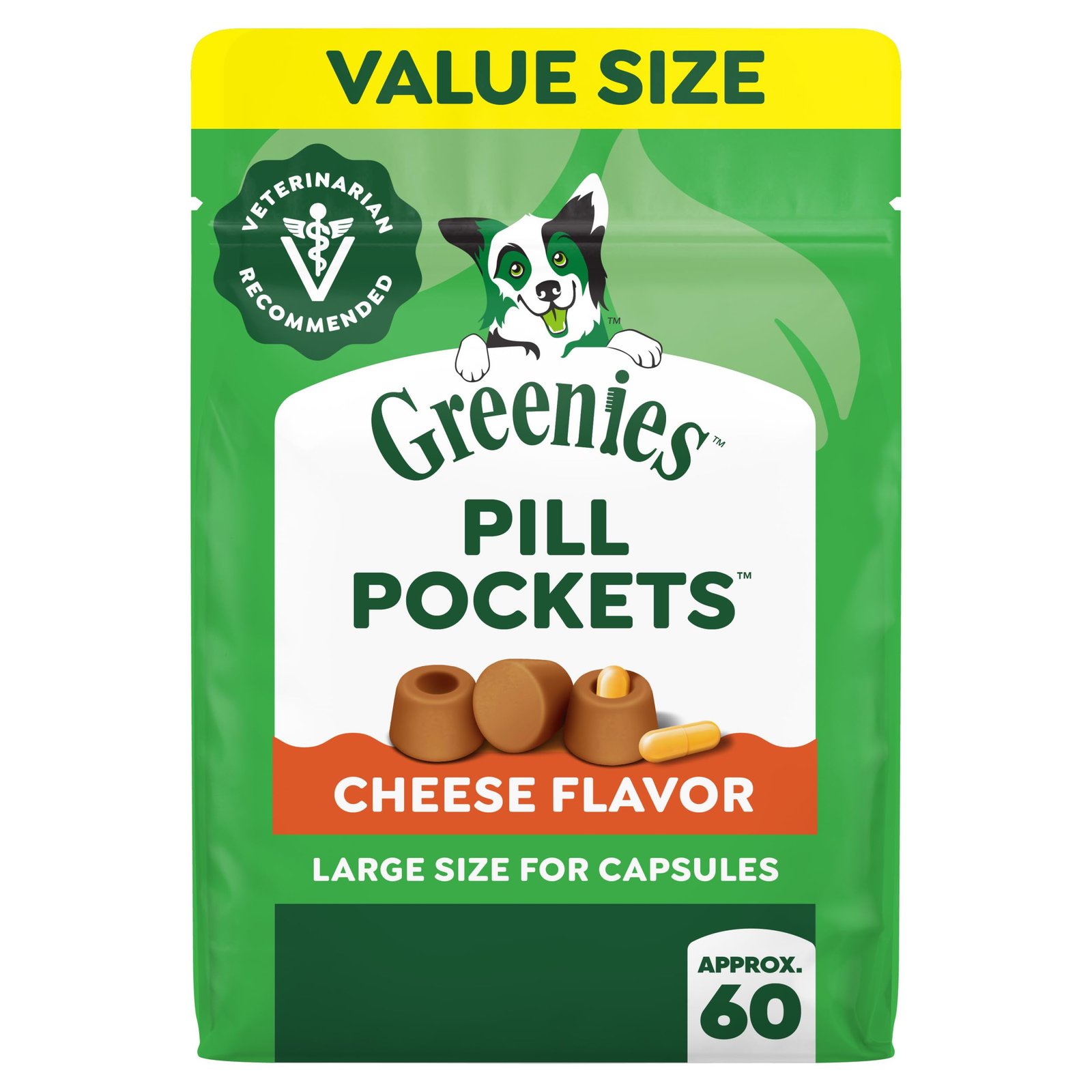
Greenies Pill Pockets Large Size Dog Treats (Cheese Flavor, 15.8 oz)
Customers find these pill pockets effective for medication administration, making it easy for their dogs to take them.
- Want the cheese motivation without the lactose and fat? Freeze-dried cheese treats deliver the same high-value reward in lighter, milk-free portions.
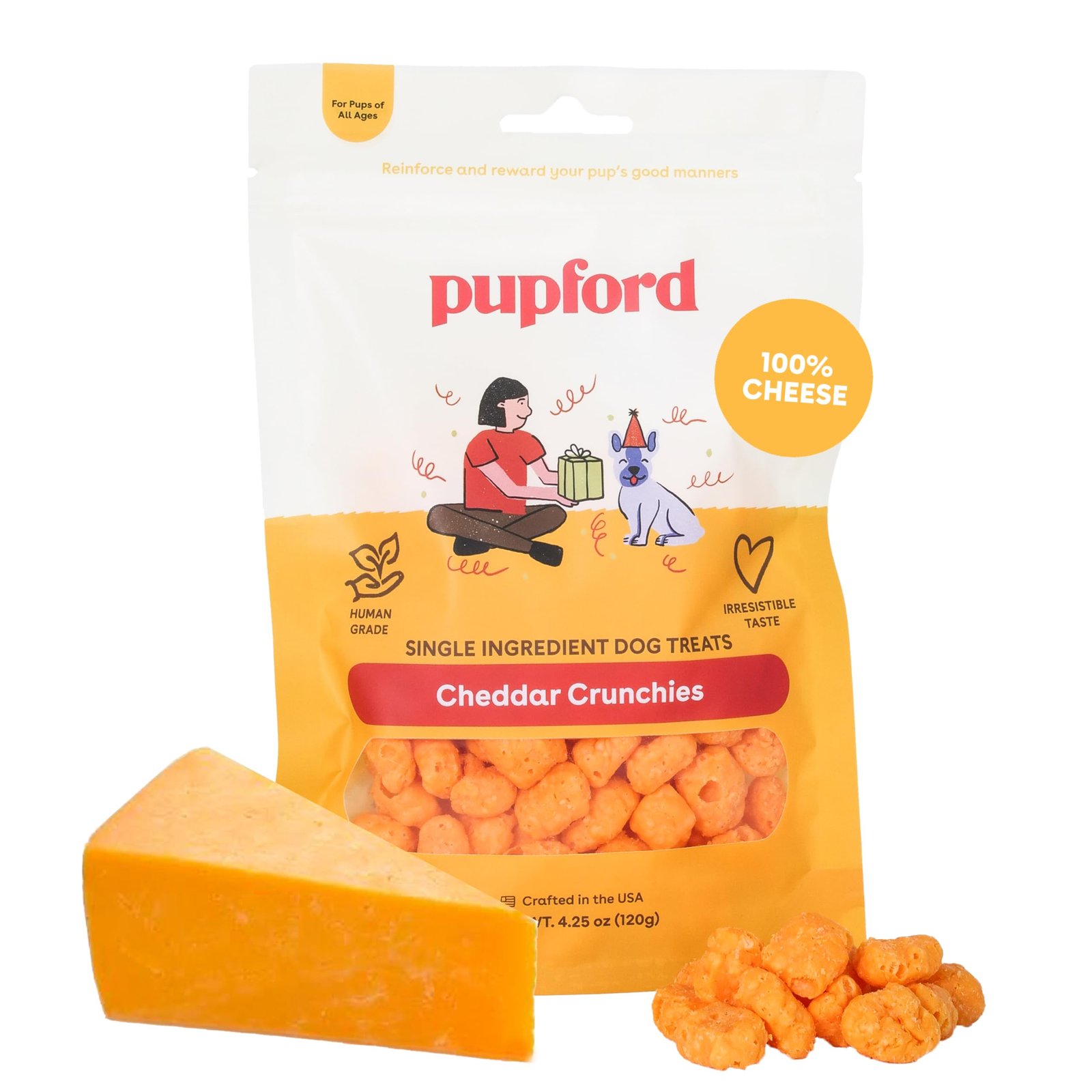
Pupford Cheese Crunchies, Dog & Puppy Treat (Cheddar, 7 oz)
Customers find these dog treats to be their pets’ favorite, with one customer noting their dog will do anything for them.
- For everyday treating: low-fat training treats do the same job with a fraction of the calories.
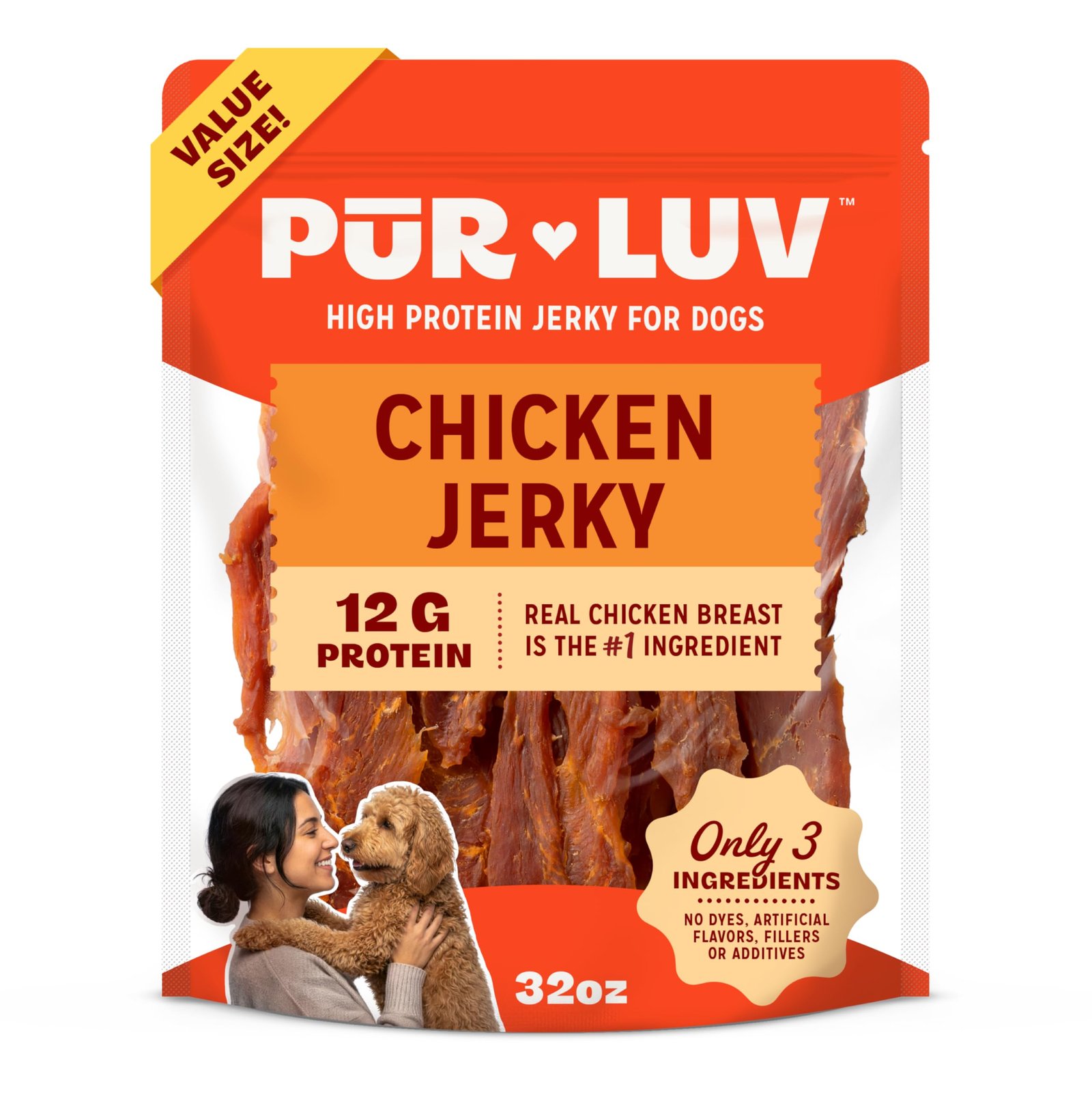
Pur Luv Dog Treats, Chicken Jerky Dog Treat (16 oz)
Customers find these dog treats to be their pets’ favorite, with high-quality ingredients and good value for money.
- Off the menu entirely: dogs with a history of pancreatitis, kidney or heart disease, or a weight-loss plan — ask your vet before any cheese. And never hand it over from the kitchen counter unless you want a lifelong counter-surfer.
FAQs
Keep cheese under 10% of daily calories. Practically: 5–6 pea-sized pieces for small dogs, one to two dice-sized cubes for medium dogs, and up to one ounce for large dogs. One ounce of cheddar is about 114 calories — a fifth of a small dog’s entire daily food budget.
Plain cheese is very unlikely to kill a healthy dog. The real dangers are blue cheese (roquefortine C, which causes tremors and seizures), garlic-flavored cheeses, and a high-fat binge that triggers pancreatitis in small or senior dogs. Those situations need a vet.
Part-skim mozzarella, string cheese, low-fat cottage cheese, or soft goat cheese — lowest fat, lowest salt, low lactose. Save cheddar for high-value training moments in tiny cubes.
After weaning, in tiny amounts. Puppies make even less lactase than adult dogs. So start with a lick of cottage cheese and watch for loose stool. Skip dairy entirely for puppies under 12 weeks.
Yes — the ASPCA recommends a small cube of cheese as a pill disguise. Soft cheddar or string cheese wrapped tight around a tablet works for most dogs. If your dog spits it out or needs daily pills, commercial pill pockets are lower-fat and shaped for the job.
Most adult dogs make very little lactase, and tolerance drops with age. Signs after cheese: gas, bloating, stomach gurgling, then loose stool within 12–24 hours. If it happens twice, your dog doesn’t tolerate dairy — switch to other treats.
Never. Cheese is one of the highest-fat human foods and a classic pancreatitis trigger. Dogs with a pancreatitis history or on a fat-restricted diet should not get any cheese without explicit vet approval.
A spoonful of low-fat cottage cheese daily is generally fine for healthy dogs and is gentler than hard cheese. Watch the sodium if your dog has kidney or heart issues, and check with your vet if your dog is on a prescription diet.
Cheese combines fat and salt — two flavors dogs are wired to seek — and its strong smell makes it instantly high-value. That’s exactly why tiny amounts work so well as a training reward, and why portion control matters: left to decide, dogs will happily overeat it.
A small piece of cheese usually leaves a dog’s stomach within 4–8 hours and is fully digested within 12–24 hours, depending on your dog’s size and the cheese’s fat content. Problems show up faster in lactose-intolerant dogs — gas and bloating within a few hours, loose stool within 12–24 hours. If vomiting replaces those signs, call your vet.
Sources
- AKC — Can Dogs Eat Cheese? Feeding Cheese to Your Dog
- PetMD — Can Dogs Eat Cheese?
- VCA Animal Hospitals — Pancreatitis in Dogs
- ASPCA — People Foods to Avoid Feeding Your Pets
- ASPCA — Sharing is Caring: Foods You Can Safely Share with Your Pet
- Blue Cross UK — Can Dogs Eat Cheese?
- Canadian Veterinary Journal (PMC) — Acute penitrem A and roquefortine poisoning in a dog
- VCA Animal Hospitals — Using Food and Treats for Training Dogs
- Purina UK — Can Dogs Eat Cheese? Read Before You Feed
This guide is for general education only and is not veterinary advice. Every dog is different, so check with your veterinarian before adding new foods, especially if your dog has health conditions. If your dog ate something concerning, contact your vet or a poison hotline immediately.

Leave a Reply