No — grapes, raisins, sultanas, and currants are toxic to dogs, and unlike most poisons, there is no established safe dose. Some dogs eat a handful and get lucky; others go into kidney failure from a single grape. That unpredictability is exactly why any grape ingestion is treated as an emergency. Here’s the science, the red-flag amounts, and exactly what to do.
Verdict: never feed grapes or raisins to a dog, and if your dog just ate one, call your vet or Pet Poison Helpline (855) 764-7661 now — don’t wait for symptoms, because the first kidney damage happens silently.
Key Takeaways: Can Dogs Eat Grapes?
- Grapes, raisins, sultanas, and Zante currants are all toxic to dogs — in every form: fresh, dried, cooked, or juiced.
- Poison-control guidance commonly uses more than 1 grape or raisin per 10 lb of body weight as the point to decontaminate — a call-the-vet trigger, not a safety line.
- Nobody can promise which dogs will react. VCA Animal Hospitals states there is no well-established toxic dose and no way to predict which dogs are susceptible.
- The leading suspect toxin is tartaric acid, per a 2024 Merck Veterinary Manual review — dogs excrete it poorly, so it builds up in the kidneys.
- Raisins and grape products (juice, jelly, hot cross buns, trail mix) are more dangerous per bite than fresh grapes.
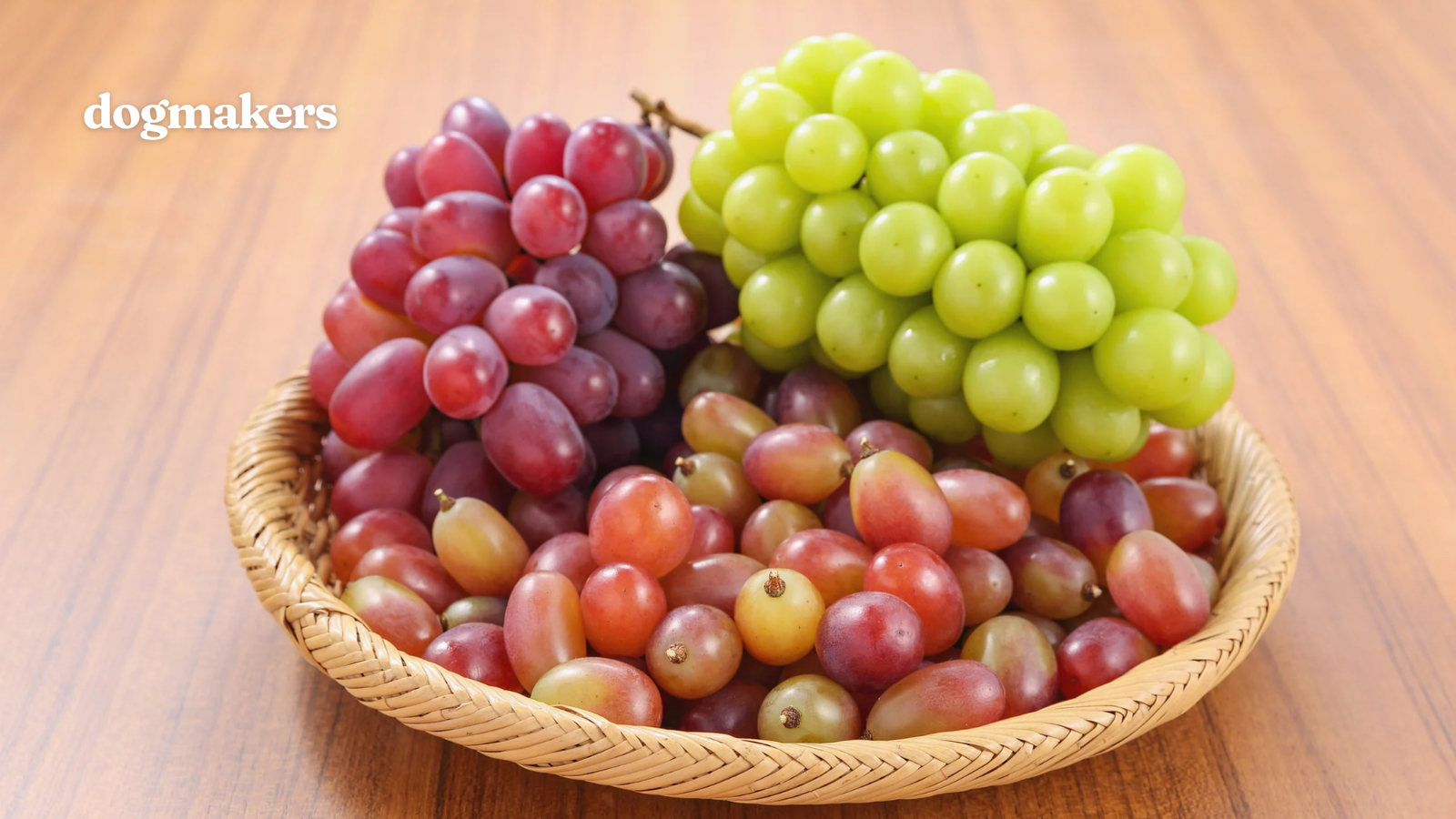
Why Are Grapes Toxic to Dogs?
Honest answer: nobody knows for certain — and that’s what makes grapes scarier than chocolate. Chocolate has a known toxin with known thresholds; grapes don’t. The strongest current suspect is tartaric acid, an organic acid present in high concentrations in grapes. Per the Merck Veterinary Manual’s 2024 review — authored by a veterinarian from ASPCA Animal Poison Control — dogs lack the organic-acid transporters other species have, so tartaric acid accumulates in the kidney tubules. The theory fits the weird evidence: tamarind and cream of tartar, both tartaric-acid sources, have caused the same kidney injuries in dogs, in cases documented in a 2022 veterinary emergency study. It also explains why reactions are idiosyncratic — amount alone doesn’t predict outcome.
How Many Grapes Are Dangerous for a Dog?
Per VCA: ” There is no well-established toxic dose for any of these fruits, and some dogs may have individual sensitivities, causing poisoning to occur when they eat even a small amount. There is currently no way to predict which dogs may be more susceptible.“
That said, poison-control professionals need practical triage numbers, and the widely used rule of thumb is: more than 1 grape or raisin per 10 lb of body weight is worth a decontamination call. Use it as a trigger to call — never as a green light:
| Dog’s weight | Red flag (call the vet from here) |
|---|---|
| 10 lb | ~1 grape or raisin |
| 20 lb | ~2 grapes |
| 40 lb | ~4 grapes |
| 60 lb | ~6 grapes |
| 80 lb | ~8 grapes |
Three honest caveats: dogs have been poisoned below these numbers; a “count” is guesswork after a dog raids a fruit bowl; and raisins concentrate the toxin, so the same count carries more punch. The ASPCA position is simpler and safer — grapes and raisins shouldn’t be fed to dogs at all. If you’re counting grapes, you’re already in “call the vet” territory.
Raisins, Sultanas, Currants, and Grape Products
Raisins, sultanas, and Zante currants are dried grapes — every bit as toxic, just concentrated. The grocery-store trap: bags labeled “currants” in the baking aisle are Zante currants, which are dried grapes and are dangerous. (True fresh black and red currants are a different plant entirely — related to gooseberries — and Merck notes they have not been associated with grape-type kidney injury. But bakery products almost always mean Zante currants. Treat every “currant” in a recipe like a raisin.)
Where grapes hide:
- Hot cross buns, raisin bread, fruitcake, mince pies — the classic holiday and Easter ER cases.
- Trail mix and granola bars — raisins plus chocolate and nuts, a triple threat.
- Grape juice — concentrated and unmeasured; ingestion warrants a call.
- Grape jelly and jam — grape content plus sugar, and sugar-free versions often contain xylitol, which is separately lethal.
- Wine, vinegar, grape must — byproducts of the same fruit; never offered, never spilled unattended.
And grape tomatoes? They’re not grapes — they’re tomatoes (a completely different plant family). Sliced grape tomatoes are generally fine for dogs in moderation.
My Dog Ate a Grape — What To Do Right Now
- Remove any remaining grapes or raisins and estimate the count as best you can.
- Collect the details. What was it (fresh grape, raisin, bun, trail mix), roughly how much, and when? Photograph packaging — no lab test confirms grape poisoning, so the ingestion history IS the diagnosis, per VCA.
- Don’t wait for symptoms. Vomiting is the most common first sign, but some dogs don’t vomit at all before kidney damage begins.
- Call your vet or a 24/7 poison line: Pet Poison Helpline (855) 764-7661, ASPCA Animal Poison Control (888) 426-4433 (consultation fees apply). UK: Animal PoisonLine 01202 509000.
- Follow instructions exactly. Inducing vomiting can help within the first hour or two — but only do it on professional guidance. Most likely you’ll be told to come in for decontamination and fluids.
Symptoms of Grape Poisoning in Dogs
The timeline runs in two waves:
- Within 12–24 hours: vomiting (often with grape pieces visible), diarrhea, lethargy, loss of appetite, increased thirst. This wave can look deceptively mild.
- 24–48 hours: the kidney wave. Signs of serious injury: greatly reduced or no urination, abdominal pain, dehydration, vomiting, weakness, tremors. Merck notes progression to complete kidney shutdown can happen within 24–48 hours.
Once a dog stops producing urine, the prognosis drops sharply — which is why the first wave is your window to act.
What Your Vet Will Do
Treatment has one goal: block absorption, then protect the kidneys. Per VCA, that means decontamination (induced vomiting, sometimes activated charcoal), aggressive IV fluids to flush the kidneys and keep urine flowing, and repeated bloodwork to track creatinine and BUN — the kidney-value numbers that reveal damage. Dogs are typically monitored for 24–72 hours. A dog that gets prompt decontamination and treatment before symptoms develop generally has a good prognosis. There’s no antidote, so everything depends on timing.
What’s the Survival Rate?
No honest vet quotes a percentage, so we won’t either. What the evidence supports, per VCA:
- Treated before symptoms: good prognosis in general — most dogs recover.
- Treated after kidney failure sets in: guarded to poor. Once urine output stops, the kidneys have little ability to repair, and survival is less likely.
The gap between those two outcomes is hours, not days. That’s the entire case for calling the hotline the moment you see a grape go down.
The Seedless, Peeled, and Home-Grown Myth
Seedless is not safer. Peeled is not safer. Washing, halving, or freezing changes nothing — the suspected toxin isn’t in the skin or seed. Cooking doesn’t destroy it either, which is exactly why baked goods with raisins are among the most common poisonings. There is no preparation method that makes a grape safe for a dog.
Safe Fruits Dogs Can Eat Instead
Dogs who beg for fruit have real options. All of these are dog-safe in moderation: apple slices (no seeds or core), Banana coins are fine in moderation, but banana peels are a different story, blueberries, strawberries, and seedless watermelon chunks (no rind).
Disclosure: As an Amazon Associate, Dogmakers earns from qualifying purchases — at no extra cost to you.
FAQ
It can. There’s no established safe dose, and some dogs have reacted to a single grape or raisin while others tolerated more. Call your vet or Pet Poison Helpline (855) 764-7661 — don’t wait to see.
Treat it the same as a grape, or worse — raisins are concentrated. The poison-control red flag sits at about 1 raisin per 10 lb of body weight, so one raisin is already at the line for a small dog.
None is the only safe number. The rough red-flag math starts around 2 grapes for a 20 lb dog, but dogs have been poisoned by less. If your 20 lb dog ate any grapes, call.
No. Every variety tested — green, red, seedless, home-grown — has been implicated. Seedless and peeled change nothing.
Yes — grape tomatoes are tomatoes, a different plant family entirely, and sliced tomatoes are generally fine in moderation. The “grape” in the name trips up a lot of worried owners.
Possibly, on two fronts: jelly contains grape, and sugar-free versions often contain xylitol, which is separately lethal to dogs. A single lick of regular jelly is low risk; anything more warrants a call.
Vomiting and diarrhea typically appear within 12–24 hours; signs of kidney injury emerge at 24–48 hours. But by the time symptoms show, the window for easy treatment is closing.
Dogs treated before symptoms develop generally recover fully. Once kidney failure and urine shutdown set in, the prognosis becomes poor. Timing is everything.
Sources
- Merck Veterinary Manual — Grape, Raisin, and Tamarind Toxicosis in Dogs
- VCA Animal Hospitals — Grape, Raisin and Currant Poisoning in Dogs
- ASPCA — grapes and raisins guidance
- AKC — Can Dogs Eat Grapes?
- Cornell Riney Canine Health Center — chocolate and toxin ingestion guidance
- PetMD — Can Dogs Eat Grapes?
This guide is for education, not a substitute for veterinary advice. If your dog has eaten grapes, raisins, or any grape product, contact your veterinarian or a poison hotline immediately — even if your dog looks fine.

Leave a Reply